BOUAYED Zine Elabidine
PhD Student in Mechanical Engineering Modeling and Mesoscopic Simulation of thermo-fluid Transport Phenomena
Laboratory of MNEPM, Team MSMPT, Department of Mechanical Engineering.
University Of Mostaganem - Algeria
https://sites.google.com/site/equipemsmpt/
"Available energy is the main object at stake in the struggle for existence and the evolution of the world."
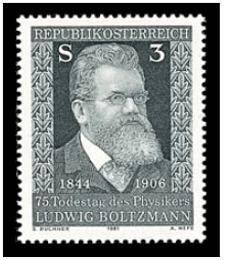
Ludwig Eduard Boltzmann (1844 - 1906)
About me
PRESENTATION
I prepare a Doctorat in the field of mechanical energy and especially in modeling and simulation of mesoscopic transport phenomena of thermo- fluid dynamics (CFD ). In my research I am interested in modeling and simulation of the buildings ventilation by the lattice Boltzmann method.
PRE MAGISTER
MAGISTER
DOCTORAT
RESEARCH SOFTWARE
I prepare a Doctorat in the field of mechanical energy and especially in modeling and simulation of mesoscopic transport phenomena of thermo- fluid dynamics (CFD ). In my research I am interested in modeling and simulation of the buildings ventilation by the lattice Boltzmann method.
PRE MAGISTER
- During the preparation of the State Engineer in Mechanical Engineering Memory Energy in 1998, I worked on the Fortran code under the direction of Dr. Fouzi TABET (Tlemcen and currently Karlshue Germany) where I have studied the influence of wealth on the emissions of a spark ignition engine fuel with natural gas as fuel.
- Then, for a period of five years in France from 2000 to 2004 where I spent a year (2000-2001) at the IUT Ville d'Avray - University of Paris 10 Nanterre. During this period for graduation MASTER responsability of the Industrial Systems Engineering , I worked with the lecturer Ms Geraldine GUIDA a deflector of an antenna in the field of microwave and I had the opportunity HFSS that the handle is a dedicated code to the approach of the microwaves . Also, I realized a project under the direction of Prof. Philippe HERVE the same MASTER where I studied the temperature profile of a surface of a material subjected to a laser pulse.
MAGISTER
- From November 2011 to January 2014 : My first contact with the world of programming and CFD back to the time of the preparation of the Magister degree . During this period I worked on the Matlab code under the direction of Associate Professor Pr. Samir HOUAT ( Mostaganem ) to solve the Boltzmann equation on a 2D grid square ventilated cavity for laminar flow . I also had the opportunity to use the Fluent code using the finite volume method to simulate the same configuration and to compare the results with those of the lattice Boltzmann method.
DOCTORAT
- From November 2014 to now : I continuous in the same domain like the Magister where I specialized in the Buildings Ventilation.
RESEARCH SOFTWARE
- From January 2015 to 2018 : Member in the Research Project CNERPU (code J0302220140111).
- From January 2019 to december 2022 : Member in the Research Project PRFU (code A11N01UN270120180001)
- Currently I am part of the LBM Mostaganem Team when the Head is Pr HOUAT Samir.
Articles
2021
2017
- Zine Elabidine Bouayed, Samir Houat. "Upper Openings Ventilation System Study of the Building by the Lattice Boltzmann Model " Defect and diffusion forum - Volume 406, page 164-169 , January 2021.
2017
- Samir Houat, Zine Elabidine Bouayed. "The lattice Boltzmann method for Mixed Convection in a Cavity" ELSEVIER Energy Procedia - Volume 139, page 186-191, December 2017.
- Zine Elabidine Bouayed, Samir Houat. "Mesoscopic Study of a square Cavity Ventilated and heated by the bottom". IOP Conference Series: Materials Science and Engineering - Volume 186, n°1, page 012036, March 2017.
Communications
Lattice Boltzmann Method
The Boltzmann method on the network (LBM: Lattice Boltzmann Method) being a relatively recent and original numerical method which was born in the early 90s.
It initially came from the Network gas method, from the theory of cellular automata and based on the formalism of statistical physics.
It is no longer interested in macroscopic quantities (speed, pressure, density), but directly in the distribution of the different particles constituting a fluid. We then speak of mesoscopic representation. This makes it competitive with other conventional methods such as finite volumes, finite elements and finite differences.
The interest of LBM lies above all in the simplicity and locality of its algorithm, thus making its parallelization easy and efficient. Very quickly, the LBM is used for unsteady and incompressible CFD calculations.
Consequently, this method makes it possible to simulate the behavior of a fluid governed by the weakly compressible unsteady Navier-Stokes equations. Consequently, as long as the Mach number of the flow remains sufficiently low, the LBM can be used for the study of unsteady and incompressible flows.
It is important to be able to situate its performance in relation to that of the classical numerical methods used to simulate and reproduce flows with heat exchange.
It initially came from the Network gas method, from the theory of cellular automata and based on the formalism of statistical physics.
It is no longer interested in macroscopic quantities (speed, pressure, density), but directly in the distribution of the different particles constituting a fluid. We then speak of mesoscopic representation. This makes it competitive with other conventional methods such as finite volumes, finite elements and finite differences.
The interest of LBM lies above all in the simplicity and locality of its algorithm, thus making its parallelization easy and efficient. Very quickly, the LBM is used for unsteady and incompressible CFD calculations.
Consequently, this method makes it possible to simulate the behavior of a fluid governed by the weakly compressible unsteady Navier-Stokes equations. Consequently, as long as the Mach number of the flow remains sufficiently low, the LBM can be used for the study of unsteady and incompressible flows.
It is important to be able to situate its performance in relation to that of the classical numerical methods used to simulate and reproduce flows with heat exchange.